
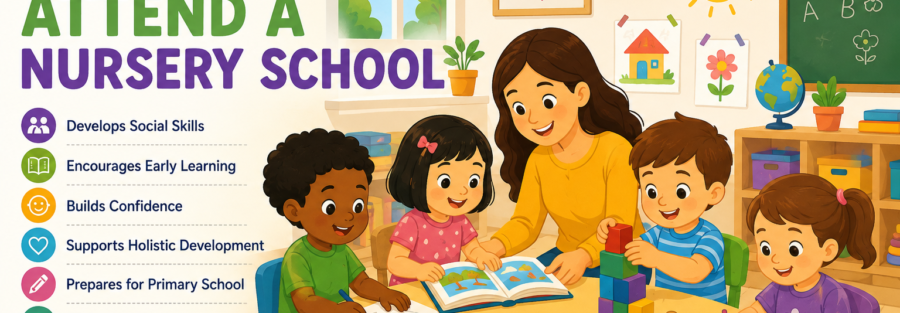
Starting nursery school is an important step in a child’s early development. For many children, nursery is their first experience of learning, making friends, following routines, and spending time away from home.
A good nursery provides much more than childcare. It creates a safe and supportive environment where children can develop essential skills that prepare them for primary school and beyond.
1. Developing Social Skills
Nursery gives children the opportunity to interact with other children of the same age. Through play and group activities, they learn how to share, communicate, cooperate and build friendships.
These early social experiences help children become more confident when interacting with others.
2. Building Confidence and Independence
Nursery encourages children to do simple things for themselves, such as putting away their toys, choosing activities, eating independently and following simple instructions.
These small achievements help children develop confidence and a sense of independence.
3. Learning Through Play
Children learn best when they are actively involved and having fun. Nursery provides opportunities for learning through activities such as storytelling, singing, painting, puzzles, construction, outdoor play and imaginative games.
These activities help develop creativity, problem-solving and communication skills.
4. Preparing for Primary School
Nursery helps children become familiar with routines such as listening to teachers, sitting during group activities, completing tasks and transitioning between different activities.
By the time they start primary school, children are more likely to feel comfortable in a structured learning environment.
5. Developing Communication and Language
Everyday conversations, stories, songs and group activities help children develop their vocabulary and communication skills.
They learn how to express their feelings, ask questions, listen to others and communicate their ideas.
6. Supporting Emotional Development
Nursery is also a place where children learn about their emotions and how to manage them. With support from experienced early years practitioners, children can learn to express their feelings appropriately, develop resilience and understand the feelings of others.
7. Encouraging Physical Development
Children need opportunities to move, explore and develop their physical abilities. Nursery activities can support both gross motor skills, such as running and climbing, and fine motor skills, such as drawing, cutting and handling small objects.
These skills are important for everyday activities and future learning.
8. Creating a Love for Learning
Perhaps one of the greatest benefits of nursery is helping children discover that learning can be enjoyable.
When children are encouraged to explore, ask questions, experiment and discover new things in a positive environment, they begin to develop curiosity and a lifelong love of learning.
Choosing the Right Nursery Matters
While attending nursery can provide many benefits, the quality of the environment matters. Parents should look for a nursery where children are safe, valued and supported by caring and qualified practitioners.
A good nursery should provide a balance of learning, play, creativity, physical activity and social interaction while recognising that every child develops at their own pace.
Giving Your Child the Best Start
Nursery is not simply about preparing a child for school. It is about giving children the opportunity to grow, explore, develop relationships and become confident little individuals.
With the right support and environment, nursery can give your child a strong foundation for their next stage of learning—and for life.
